
Let me be straight with you about imported halal meat in Zanzibar: if you’re running a hotel, restaurant, or food service business here, you need to understand what’s really happening in the market. I’ve watched too many businesses struggle with inconsistent supply, questionable quality, and confusing regulations when it comes to imported halal meat. The truth is simple: Zanzibar’s culinary scene has evolved dramatically, and the demand for quality imported halal meat has never been higher. From beachfront resorts in Nungwi to boutique hotels in Stone Town, everyone wants to offer their guests authentic international cuisine while maintaining strict halal standards.

Here’s what most people don’t tell you: the imported halal meat market in Zanzibar isn’t just about bringing in foreign products. It’s about understanding supply chains, quality control, and most importantly, working with partners who actually know what they’re doing. I’ve seen restaurants pay premium prices for supposedly “imported” meat that’s been sitting in storage for months, losing quality and flavour with every passing day. That’s why I want to break down exactly how this market works, who the real players are, and how you can ensure you’re getting the best possible product for your business.
What Countries Are Major Suppliers of Halal Meat to Zanzibar?
Let me be direct about this: when it comes to imported halal meat in Zanzibar, not all suppliers are created equal. The market has evolved from a few scattered importers to a sophisticated network of international suppliers, but here’s the reality check – most businesses don’t actually know where their meat comes from. They see a label that says “imported” and assume quality, but that’s where the problems begin.
The truth is, Zanzibar’s imported halal meat market is dominated by a few key regions, each with their own strengths and weaknesses. You’ve got suppliers from South Africa, Brazil, Australia, and increasingly from European countries with strong halal certification systems. But here’s what nobody tells you: the country of origin matters less than the actual supply chain integrity. I’ve seen Brazilian beef that’s better than some Australian cuts, and South African poultry that outperforms European imports – it all comes down to the specific producer, the handling process, and most importantly, the cold chain management.
Now, let me give you the straight talk about Pilgram Group International. We’re not just another importer – we’re the company that actually understands this market. We’ve spent years building relationships with the best producers across multiple continents, and we’ve developed a supply chain that ensures consistent quality from farm to plate. While other suppliers might tell you they have “connections” or “sources,” we actually have verified, traceable supply lines that guarantee every product meets our standards.
Here’s the practical reality: when you’re sourcing imported halal meat for your Zanzibar business, you need to ask specific questions. Where exactly does the meat come from? What’s the halal certification process? How long has it been in transit? What’s the temperature control like throughout the journey? These aren’t just technical details – they’re the difference between serving premium quality meat and disappointing your customers.
How Pilgram Group International Sources Premium Halal Meat
Let me break down exactly how we do things differently. First, we don’t just buy from random suppliers – we work with certified producers who meet our specific standards. Every single product in our catalogue has been vetted for quality, halal compliance, and taste profile. We understand that Zanzibar’s hospitality industry needs variety, consistency, and reliability, and that’s exactly what we deliver.
Our poultry products, for example, come from producers who specialise in halal processing. We’re talking about breast fillet (fileti), breast with bone (kidali), gizzards (filigisi), deboned whole chicken, chicken leg (paja), chicken wings (kipapatio), and chicken franks (soseji) – all supplied frozen in 10 kg cartons to maintain quality throughout the cold chain. For whole chicken options, we offer griller (kuku mzima) in both 1.0 kg and 1.1 kg birds, perfect for different menu requirements.
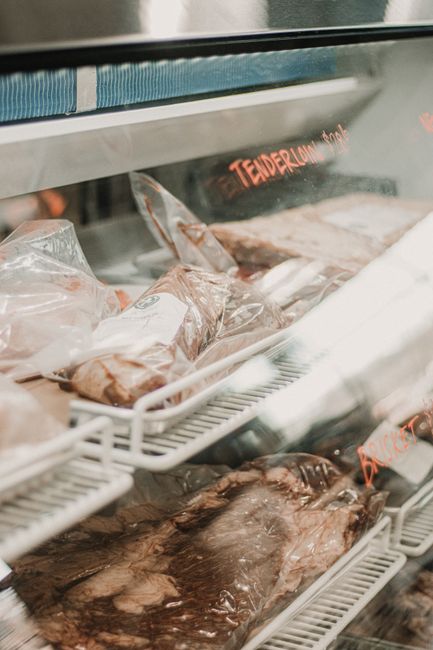
When it comes to beef, our standards are even higher. We source sirloin, rump, T-bone with fillet, ox-tail, topside, brisket, silverside, cut beef, ribeye, short ribs, beef fillet, minute steak, blade, lean/steak mince, and economy/standard mince – all in standard 10 kg cartons unless otherwise specified. Each cut comes from producers who understand both quality meat production and halal requirements.
How Is Imported Halal Meat Regulated in Zanzibar?
Let me be brutally honest about regulation: most businesses think they understand halal certification, but they’re missing the crucial details. Imported halal meat regulation in Zanzibar operates at multiple levels – international standards, Tanzanian import regulations, and local halal certification requirements. The problem? Most suppliers only focus on one or two of these, leaving gaps that can compromise quality and compliance.
Here’s how it really works: first, the meat needs proper halal certification from the country of origin. This isn’t just a stamp on a document – it’s a complete process that starts with how the animals are raised, continues through the slaughter process, and extends to handling and packaging. Then, it needs to meet Tanzanian import regulations, including health certificates, veterinary inspections, and customs clearance. Finally, it needs to maintain halal integrity throughout the entire supply chain to Zanzibar.
Now, here’s where most suppliers fail: they treat these as separate checkboxes to tick. At Pilgram Group International, we treat them as interconnected requirements that need to be managed as a complete system. We don’t just get halal certification – we verify it at every step. We don’t just clear customs – we ensure the cold chain is maintained throughout. We don’t just deliver products – we guarantee they meet all regulatory requirements.
The practical reality for your business is this: when you work with us, you’re not just buying meat. You’re buying a complete compliance package. Every product comes with proper documentation, every shipment is tracked for temperature control, and every delivery meets both regulatory and quality standards. This isn’t just about avoiding problems – it’s about building trust with your customers who expect genuine halal products.
The Cold Chain Reality Most Suppliers Don’t Talk About
Let me give you the unvarnished truth about cold chain management: it’s the single most important factor in imported halal meat quality, and most suppliers cut corners here. I’ve seen meat that was perfectly halal when it left the producer become compromised because of poor temperature control during shipping or storage.
Here’s how we do it differently: our entire operation is built around maintaining the cold chain from start to finish. Products are inspected, packed, and stored under controlled temperatures before shipping. During transit, we use monitored refrigeration systems. Upon arrival in Zanzibar, they go directly into our temperature-controlled storage facilities. And during delivery, we use refrigerated vehicles to ensure consistency.
This isn’t just technical detail – it’s the difference between meat that tastes fresh and premium, and meat that’s lost its quality through improper handling. When you serve our products to your customers, you’re serving meat that’s been treated with the care and respect it deserves from the moment it was produced.
The Taste Difference of Various Imported Meats
Let me be direct about taste: if you think all imported halal meat tastes the same, you’re missing the entire point of sourcing quality products. The truth is, different cuts, different countries of origin, and different handling methods create dramatically different taste profiles. Understanding these differences isn’t just for food snobs – it’s essential for creating menus that actually impress your customers.
Take our beef selection, for example. Our sirloin has a different texture and flavour profile than our rump. T-bone with fillet offers a combination of textures that’s perfect for premium steak dishes. Ox-tail brings rich, gelatinous qualities that are essential for certain traditional dishes. Each cut isn’t just a piece of meat – it’s a specific ingredient that should be used for specific purposes.
Here’s what most chefs don’t realise: the taste difference starts long before the meat reaches your kitchen. It begins with how the animals are raised, what they’re fed, how they’re handled during slaughter, and most importantly, how the meat is aged and processed. That’s why we’re so selective about our suppliers – we understand that taste is built into the product from the beginning, not something you can create through cooking alone.
Let me give you a practical example: our chicken products. The breast fillet (fileti) has a different texture and moisture retention than the breast with bone (kidali). Gizzards (filigisi) offer a unique texture that’s perfect for certain traditional dishes. Deboned whole chicken gives you flexibility for various preparations. Chicken leg (paja) has richer flavour due to higher fat content. Chicken wings (kipapatio) are perfect for appetisers or bar snacks. And chicken franks (soseji) need specific texture and seasoning profiles.
The reality is this: when you understand these taste differences, you can create menus that actually work. You’re not just serving “meat” – you’re serving specific products that enhance specific dishes. This level of understanding is what separates average restaurants from exceptional ones, and it’s exactly what we help our clients achieve.
Why Pilgram Group International Products Taste Better
Let me break down exactly why our products consistently deliver better taste. First, we source from producers who prioritise quality over quantity. This means animals are raised properly, fed appropriate diets, and handled with care. Second, our halal processing methods are designed to preserve natural flavours and textures, not just meet religious requirements. Third, our cold chain management ensures that the meat reaches you in optimal condition, with all its natural qualities intact.
But here’s the real secret: we don’t just sell you products – we help you understand how to use them. We work with chefs and kitchen teams to explain the characteristics of each cut, suggest preparation methods, and share insights about cooking techniques. This partnership approach means you’re not just buying meat – you’re buying expertise that helps you create better dishes.
Our Delivery System: Reliability You Can Actually Count On
Let me be straight about delivery: promises are cheap, but consistent, reliable delivery is what actually matters for your business. I’ve seen too many restaurants and hotels struggle with inconsistent supply, missed deliveries, and last-minute scrambling to find alternatives. That’s why we’ve built a delivery system that actually works for Zanzibar’s unique geography and business needs.
Here’s how it works: we have structured delivery routes that ensure reliability and consistent supply across the entire island. On Mondays and Fridays, we cover Kizimkazi, Jambiani, Paje, and Michamvi. On Wednesdays and Saturdays, we serve Uroa, Kiwengwa, Matemwe, and Nungwi. For town and urban areas, we offer daily deliveries from Monday to Saturday. Sunday is our maintenance and preparation day, with no regular deliveries, though we do offer emergency deliveries on off-days at an additional cost for genuine emergencies.
This isn’t just a schedule – it’s a system designed around your business needs. We understand that different areas have different requirements, and we’ve structured our routes to match demand patterns. More importantly, we maintain this schedule consistently, so you can plan your operations with confidence.
The practical benefit for you is simple: predictability. You know exactly when your orders will arrive, you can plan your menu and inventory accordingly, and you never have to worry about running out of essential ingredients. This level of reliability is what allows successful restaurants and hotels to focus on what they do best – serving their customers – rather than constantly managing supply chain problems.
Packaging and Pricing: Transparency You Can Trust
Let me be brutally honest about packaging and pricing: confusion and hidden costs are where most suppliers make their real money. I’ve seen businesses pay for “premium” packaging that adds no value, or get surprised by additional charges that weren’t mentioned upfront. That’s why we take a completely different approach.
Our standard packaging is 10 kg cartons for most products, unless otherwise specified. This isn’t arbitrary – it’s designed to maintain quality, facilitate handling, and provide consistent portion sizes. Each carton is clearly labelled with product information, weight, and handling instructions. More importantly, our prices are listed per carton, with all costs included upfront.
Here’s what this means for you: no surprises. You know exactly what you’re paying for, exactly what you’re getting, and exactly how it will arrive. This transparency extends to our pricing validity – all prices are valid only for the specified date, which means we adjust for market conditions rather than surprising you with sudden increases.
The practical benefit is simple: better budgeting and planning. You can calculate your food costs accurately, plan your menu pricing accordingly, and manage your inventory with confidence. This level of financial predictability is essential for running a successful food service business, and it’s exactly what we provide.
Payment Method: Simple, Secure, and Modern
Let me address payment directly: complicated payment processes waste time and create unnecessary friction. That’s why we’ve adopted a simple, modern payment system that works seamlessly for our clients across Zanzibar.
We accept payments via Mixx by Yas, using any TIPS-enabled banking application. Our account details are straightforward: Account Name: PGI Global Limited, TIPS/Merchant Number: 18188015. This system works across supported banks and networks, providing a secure, efficient way to handle transactions.
Here’s why this matters: it eliminates payment delays, reduces administrative overhead, and provides clear transaction records for both parties. You can make payments quickly and easily, without dealing with cash handling risks or complicated bank transfer processes. This efficiency benefits everyone – you get your supplies faster, and we can focus on delivering quality rather than chasing payments.
Why Recurring Supply Makes Sense for Most Businesses
Let me give you the straight talk about recurring supply: it’s not about locking you into contracts or creating dependency. It’s about creating predictability and efficiency for both parties. When we know your regular needs, we can plan better, source better, and deliver better. When you know you’ll receive consistent supply, you can plan menus, manage inventory, and control costs more effectively.
The reality is simple: successful food service operations thrive on consistency. Recurring supply provides that consistency, while still allowing flexibility for seasonal changes, special events, or menu updates. It’s a partnership approach that benefits everyone involved.
Everything Is Halal: Our Uncompromising Standard
Let me be absolutely clear about this: everything we supply is halal. This isn’t just a label or a certificate – it’s a fundamental principle that guides every aspect of our operation. From sourcing to processing to delivery, halal integrity is non-negotiable.
Here’s what this means in practice: we work only with suppliers who share our commitment to halal standards. We verify certification at every step. We maintain separation from non-halal products throughout our supply chain. And we ensure that every product meets both the letter and spirit of halal requirements.
For your business, this provides complete confidence. You can serve our products to halal-conscious customers without hesitation or concern. You can build menus around our products knowing they meet religious requirements. And you can promote your halal offerings with genuine assurance.